
Air Quality Basics
What is air pollution exactly and how do we know when to take precautions to protect our health? On this page, you will learn about the most commonly studied air pollutant and how to interpret the color classification of air pollutants. Get a free download of a bilingual air quality brochure at the bottom of this page!
Particulate Matter (PM)
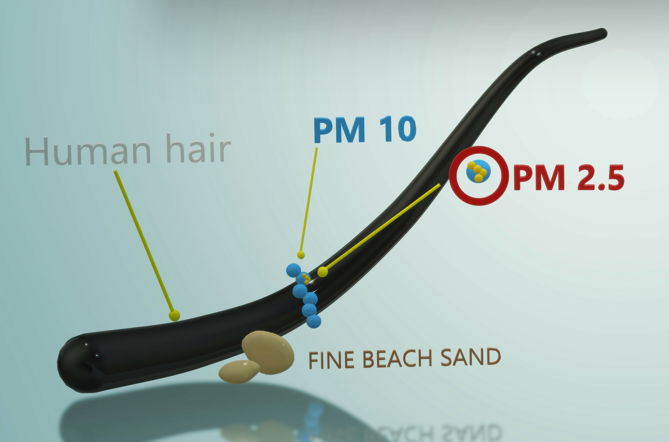
The sum of all solid and liquid inorganic compounds suspended in air, many hazardous. Often seen as PM 2.5, PM 5, and PM 10, which refers to size in micro meters.
Sources of PM
wildfires, dust, industrial processes, combustion engines, and more
Health effects associated with PM 2.5 exposure
Air Quality Color Classification
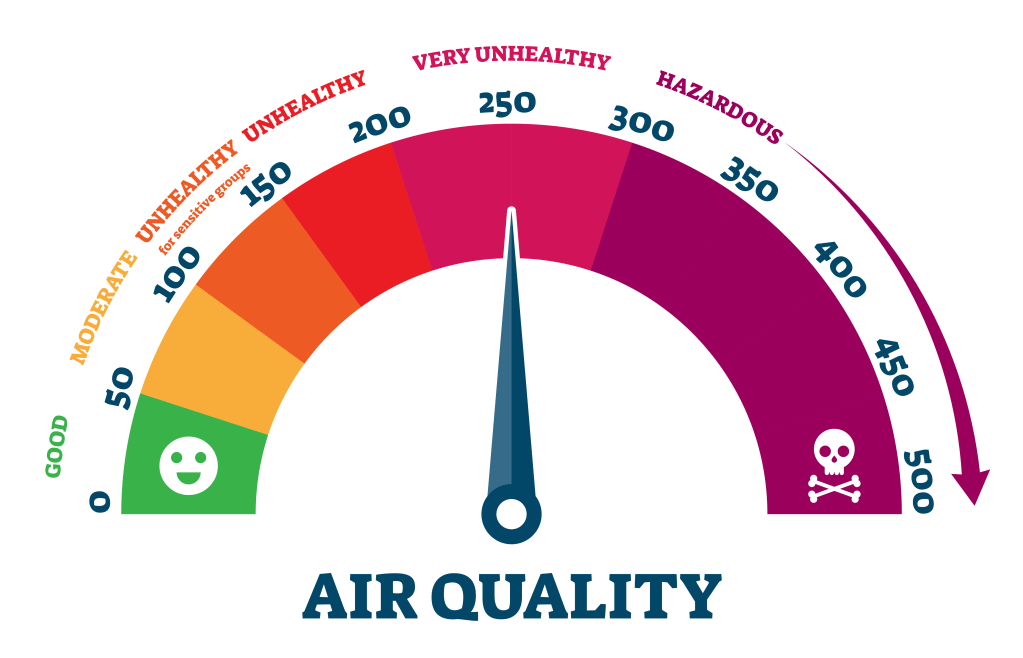
What to do if the air quality is GOOD?
Outside activity is okay!
What to do if the air quality is MODERATE?
People with asthma or other respiratory problems should limit activities and wear an N95 mask outdoors
What to do if the air quality is UNHEALTHY for sensitive groups?
Seniors 65+, those under 18, and immunocompromised should limit outdoor activity
What to do if the air quality is UNHEALTHY?
Wear an N95 mask outside. Sensitive groups should stay inside
What to do if the air quality is VERY UNHEALTHY?
Avoid going outside and wear an N95 when you are outside
What to do if the air quality is HAZARDOUS?
Very dangerous to be outside. Stay inside and wear an N95 if you have to be outside